
Understanding Root Canals
[updated November 2025]
CONNECT WITH US:
Understanding Root Canals
What They Are, Why They’re Needed & How They Save Your Smile
A Complete Guide for Tukwila, Renton & SeaTac Patients
Root canals have developed quite a reputation, usually because the phrase itself sounds a little intense. Yet in reality, the procedure is far gentler and far more predictable than people imagine. For many adults, especially anyone juggling work, family, stress, and anything else, a root canal can quickly stop pain and preserve a natural tooth in a way no other treatment can.
A lot of people avoid getting root canals because they think they are painful procedures. Root canal therapy actually helps to get rid of the pain of the infected pulp. Thanks to modern technology root canals are now no more painful than getting a regular dental filling, and with IV conscious sedation it’s even more comfortable and stress-free. Our dental team in Tukwila delivers high-tech, precise, extremely comfortable root canal therapy for individuals living in Tukwila, Renton, SeaTac and the Southcenter communities who simply want their mouths to stop aching and get back to normal life.
What is a Root Canal?
A root canal is both simple and sophisticated. Inside every tooth is a tiny chamber holding nerves, blood vessels, and connective tissue called the pulp. When bacteria breach this inner area, infection triggers inflammation, pressure, and the kind of tooth pain that interrupts work meetings, gym plans, or quiet evenings at home.
During a root canal, one of our dentists removes the infected pulp, gently cleans the inside of the tooth, and then seals it. After the procedure, the tooth remains in your mouth – still useful, still part of your smile – but without the pain, irritated nerve that caused so much trouble.
5 Reasons Why Someone Would Need a Root Canal?
Pain is usually the first clue, but there are several reasons a root canal becomes necessary.
1. Deep decay or large cavities
When decay burrows through enamel and dentin, bacteria reach the nerve. At that point, a filling can’t fix the problem because the infection has moved deeper.
2. Cracks, chips, or fractures
Even small cracks you barely notice can invite bacteria into the inner tooth. Some people grind at night. Others bite something unexpectedly hard. Once bacteria slip inside, irritation begins.
3. Trauma or injury
A sports mishap or minor accident can bruise a nerve without leaving visible damage. The tooth looks normal, yet the nerve inside struggles. Over time, inflammation intensifies, and a root canal becomes the best option.
4. Failed or aging dental work
Old fillings sometimes leak or separate. When bacteria tuck themselves beneath the restoration, infection develops quickly.
5. Lingering tooth pain
A tooth that throbs, pulses, or stings usually needs attention. When discomfort lasts more than a day or two, evaluation becomes essential.
How Do Root Canals Help
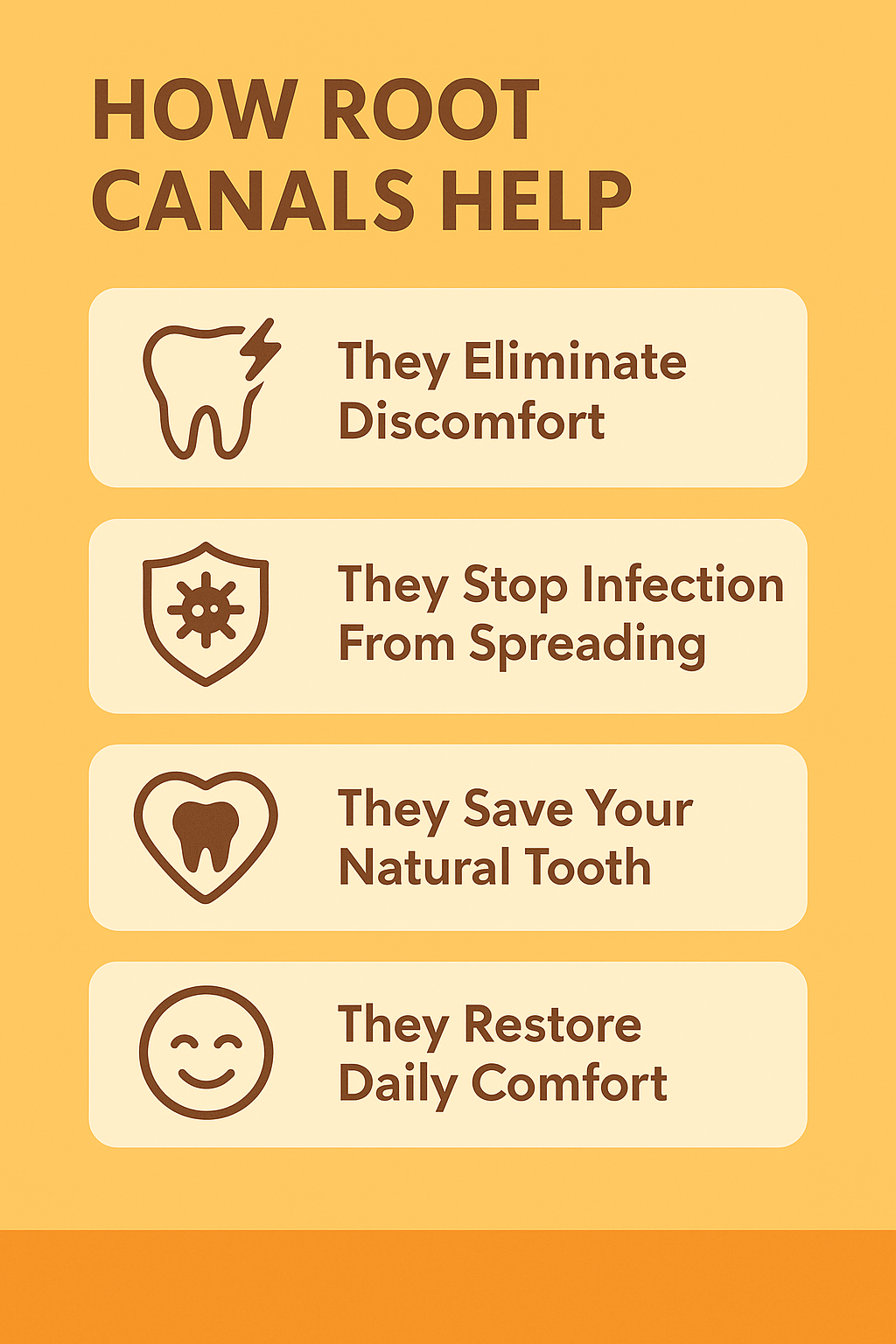
Root canals work because they target the actual source of the pain instead of masking it.
- They eliminate discomfort
Most people feel noticeable relief almost immediately because the inflamed nerve is removed. A surprising number of patients say, “Oh, that wasn’t bad at all.” - They stop the infection from spreading
Untreated infections can move into the jawbone, face or bloodstream. Early intervention protects your overall health and boundaries your body prefers not to cross. - They save your natural tooth
Keeping your own tooth helps maintain chewing stability and protects surrounding teeth from shifting. A missing tooth, even just one, can throw off your bite long-term. - They restore daily comfort
Once the root canal is completed and a crown is added, the tooth can function normally again without irritation, pressure, or temperature spikes.
What to Expect During a Root Canal at Smiles @ Southcenter
Modern dentistry has transformed root canal treatment into a calmer, streamlined experience – especially when you choose a practice with advanced technology and options for anxiety relief. Many patients are surprised by how comfortable the entire visit feels, and IV conscious sedation can make it easier for individuals who feel nervous or have trouble sitting still.
Here’s how the root canal process typically works:
- A Thorough Exam & Digital X-Rays
One of our dentists begins by evaluating the tooth, reviewing x-rays and checking sensitivity, surrounding gum tissue and bone levels. The goal is to understand exactly what’s causing the discomfort so the procedure is tailored specifically to your needs. - Numbing the Area – and Sedation if Desired
Local anesthesia ensures the tooth and surrounding tissue become completely numb. For individuals who experience dental anxiety, have a sensitive gag reflex, or simply want a more relaxed visit, IV conscious sedation is available. This option allows you to remain awake but deeply calm and unaware of the sensations around you; time often feels like it passes quickly. Patients who choose sedation frequently say it helped them transform an intimidating visit into a smooth, almost effortless one. - Removing the Infected or Irritated Pulp
Once you’re comfortable, one of our dentists creates a small opening in the tooth to remove the inflamed or infected pulp. Many people feel immediate relief because the pressure inside the tooth decreases almost instantly. - Cleaning and Disinfecting the Root Canals
Specialized instruments gently clean the tiny canals inside the tooth. Every surface is disinfected to eliminate bacteria, prevent future infection and provide a clean foundation for sealing. - Sealing the tooth for Long-Term Stability
After thorough cleaning, the empty canals are filled with a biocompatible material that seals the tooth from the inside out. This step protects the tooth long-term and helps maintain its structural integrity. - Adding a Crown to Strengthen the Tooth
Most root canal-treated teeth benefit from a crown to reinforce their structure and prevent fractures. Once the crown is placed, the tooth looks and functions like a natural, healthy part of your smile again. - Recovery and After-Care Guidance
You may experience mild tenderness for a day or two, which is normal. Most adults return to work, errands, or family activities the same day – especially if sedation was used, since the procedure itself feels shorter and more relaxed.
Common Signs You May Need a Root Canal
You may need a root canal if you notice:
- persistent or pulsating pain
- sensitivity to temperature that lingers several seconds
- swollen or irritated gums near a specific tooth
- a grey, brown or noticeably darker tooth
- pain while chewing or biting
- a chipped tooth that suddenly begins hurting
- deep decay causing aching or pressure
- a small bump on the gums resembling a pimple
Are Root Canals Painful?
Root canals remove pain — they don’t create it. Long-term discomfort comes from the infection, not the procedure. With IV conscious sedation and calming techniques, the entire experience feels surprisingly manageable. One patient described it as “easier than getting my taxes done” which isn’t a glamorous comparison but still relatable.
How Long Does a Root Canal Take?
Timing depends on the tooth’s complexity. A single appointment usually lasts 60–90 minutes. Individuals with more than one canal or additional infection may require slightly more time. Most people return to work the same day, grab coffee afterward or continue whatever they were already doing without much interruption.
Soreness can happen, though it’s typically mild and resolves quickly. A day or two of tenderness is normal and usually minimal.
What Happens if You Don’t Get a Root Canal?
Avoiding treatment may seem tempting, especially when life feels busy. Nevertheless, dental infections don’t fade away. They grow. They spread. And eventually, the tooth becomes harder to save. Delaying treatment may lead to swelling, bone loss, more invasive procedures or losing the tooth entirely.
One consequence people often misunderstand is how a single infected tooth affects whole-body health. Bacterial spread can influence overall inflammation, sinus discomfort, or systemic issues.
Root Canal Treatment in Tukwila, Renton & SeaTac
Individuals throughout the Tukwila, Renton, SeaTac, Burien, Des Moines, and Southcenter communities trust Smiles @ Southcenter for compassionate, comprehensive root canal therapy. Our priority is always saving natural teeth whenever possible and providing genuinely comfortable care that feels supportive instead of stressful.
Schedule Your Root Canal Evaluation in Tukwila
Tooth pain rarely improves on its own and rarely waits until life “slows down” so getting evaluated early can prevent complications. If something feels off — throbbing, stinging, swelling or just not quite right — an appointment is the best next step.
About the Author – Dr. Thuy Nguyen, DDS
Dr. Thuy Nguyen DDS in Tukwila, WA holds a Bachelor of Science in Microbiology and received a Doctorate of Dental Surgery from the University of Washington. In 2011, she also completed the Progressive Orthodontic Program. She is known for her fine work and a friendly and caring attitude. Her enthusiasm for dentistry is contagious, as she designs and improves smile after smile. Dr. Nguyen is bilingual in English and Vietnamese. Dr. Nguyen has a keen eye for dental aesthetics and a talent for delivering unparalleled cosmetic dentistry.

CONNECT WITH US:
How to Recognize Tooth Pain Warning Signs Early – and When to See a Tukwila Dentist for Root Canal Treatment
Root canals…